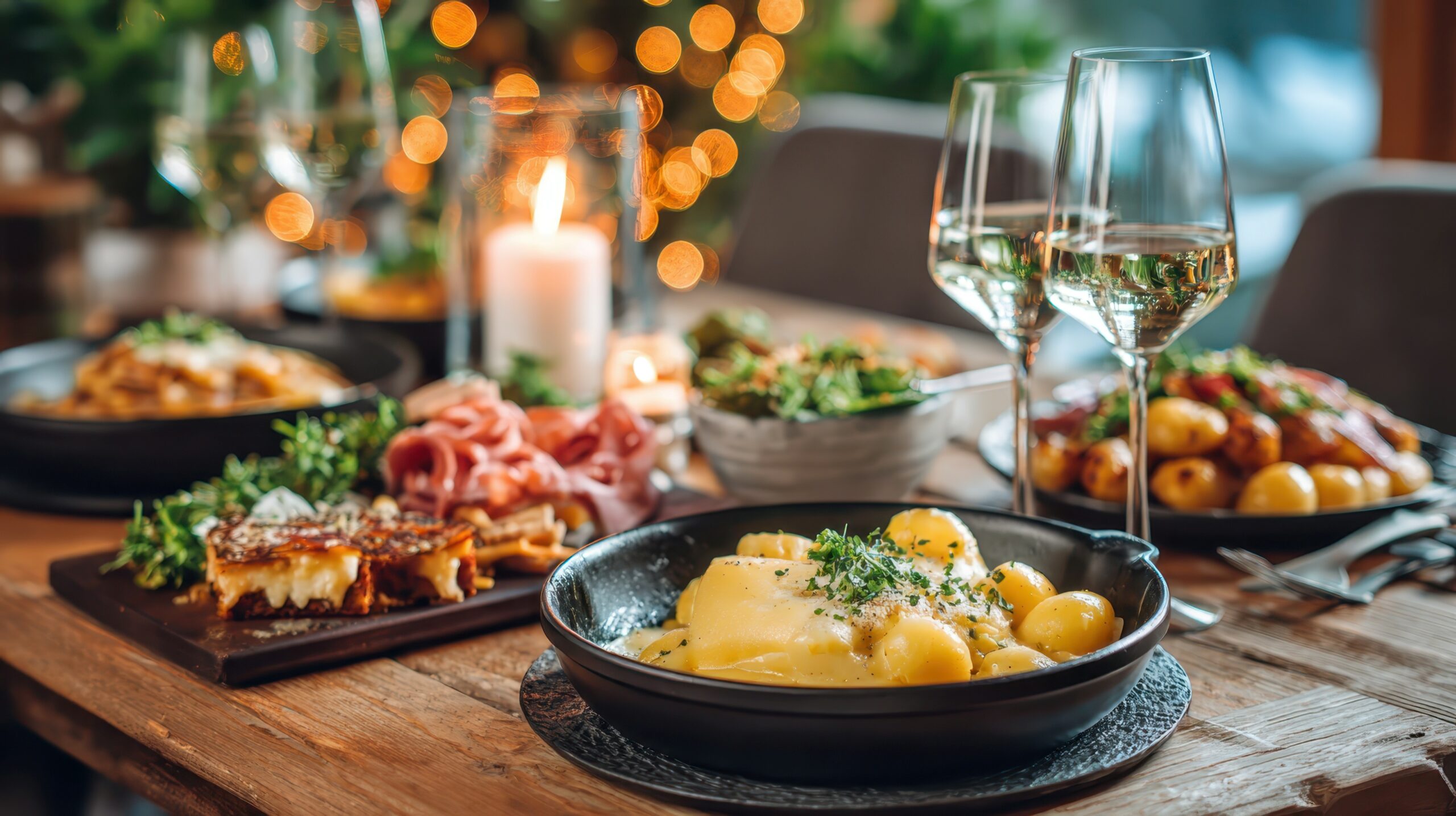
When the cold sets in, comfort food takes over. Raclette pans come out, tartiflettes go into the oven, Mont d’Or makes its seasonal return, and sharing a generous, cheese-laden dish suddenly feels like the best idea in the world. Choosing the right wine, however, is where things get interesting. Instinct might push us toward big, powerful bottles. In reality, these mountain classics prefer finesse over force. What they need is freshness to keep the cheese in balance, and just enough structure to echo their indulgent side without tipping the scales.
To help you hit the mark, we’ve gathered a few of our favourite pairings to enjoy all your winter cheese rituals. Follow along!
Raclette and melted cheeses: freshness is key
In France, raclette is the ultimate winter crowd-pleaser. It’s all about sharing, mixing and matching cheeses, charcuterie, potatoes, and even a few grilled vegetables for good measure. Generous, comforting, and unapologetically indulgent. When it comes to wine, the goal is to keep things lively. Heavy alcohol and pronounced oak tend to weigh everything down, quickly tiring the palate and stealing the spotlight from the cheese. That’s exactly what we want to avoid.
Our advice? Balance the richness of the dish with a wine driven by freshness, like our White Côtes du Rhône. A blend of Viognier, Grenache, Roussanne, and Picpoul, this wine favours balance over bravado. The nose offers aromas of yellow fruit, citrus, and white flowers, while the palate is smooth yet vibrant, carried by bright acidity and a lightly saline finish. It’s a perfect match for raclette, melted cheeses, or a Savoyard fondue, keeping the meal fresh, lively, and enjoyable right through to the last bite.
Tartiflette and richer mountain dishes: finding the right red
Tartiflette is just as generous as raclette. Melted Reblochon, potatoes, bacon, sometimes even a splash of white wine… everything about it is designed for pure indulgence. That’s exactly why the wine needs to play along rather than try to steal the show. A white can work, but more often than not, a light, gently extracted red, served slightly cool, feels right at home at the table. What to avoid? Reds that are too powerful, too tannic, or overly marked by oak. Melted cheese has no patience for hardness. It calls for wines that are easygoing, fruit-driven, and immediately enjoyable.
That’s precisely the spirit of our Nature Ventoux. Sourced from parcels at the foothills of Mont Ventoux, this wine is made with a deliberately natural approach. Grenache, Syrah, and Cinsault are vinified without additives, using short maceration and brief aging in concrete tanks, allowing the fruit to shine without artifice. In the glass, the wine shows a bright ruby colour. Aromas of ripe black fruit mingle with notes of dried lavender and wild rosemary. The palate has structure, but always in balance, with chalky tannins and a lightly spicy finish. Served between 14 and 16°C, this Ventoux pairs effortlessly with tartiflette, potato gratin with Reblochon, or a Savoyard croûte. It brings lift and contrast without weighing the meal down, and most importantly, makes you want to pour another glass.
Aged cheeses and slow-cooked dishes: time for a nice and elegant Syrah
When winter tables turn to more mature cheeses, charcuterie boards, or slow-simmered dishes, you can afford a wine with a little more depth. As always, balance remains key to the perfect pairing. That is why a wine that’s too powerful or overly extracted can quickly overpower both the food and the moment. On the contrary, a well-made Northern Rhône Syrah, for example, can rise to the occasion with ease. Its refined structure and nuanced aromas bring depth and character while keeping the palate fresh and tonic.
Our Saint Joseph is a perfect illustration of this ideal pairing. Grown on the steep hillside vineyards of the Northern Rhône Valley, this Saint Joseph captures the elegance the appellation is known for. The predominantly granite soils, worked on dramatic slopes, give the wine tension, mineral energy, and freshness, exactly what’s needed to balance richer winter dishes. In the glass, the colour is a deep garnet red. The nose reveals ripe red fruit aromas, supported by subtle spice and floral notes. On the palate, the wine is generous yet poised, with silky tannins and a long, fruit driven finish. Served between 14 and 16°C, this Saint Joseph will pair beautifully with aged cheeses, charcuterie, or slow cooked dishes. It will bring depth and dimension to each dish while preserving the necessary freshness to keep you coming back for another bite, and another glass!
So, ready to dust off the fondue set?
Melted cheeses, generous dishes, long winter meals with friends or family… Getting the pairing right often comes down to a few simple principles. Fresh, saline driven whites will work beautifully with melted cheeses, while supple, lightly extracted reds, served slightly cool, will naturally shine alongside heartier winter dishes or more mature cheeses.
In the end, it’s all about enjoying the moment and keeping the meal light on its feet. Trust your instincts. A wine you genuinely want to drink will always be the best choice.
Happy tasting!